// rates & deals
How to Create an Influencer Media Kit That Brands Actually Use
A media kit should make it easy for a brand to answer three questions: Who are you? Who do you reach? Why would you be a good partner?
You don't need a ten-page presentation. A clear one or two-page influencer media kit with reliable data is often more useful than a beautifully designed document that hides the important information.
Here's how to build one that helps brands make decisions.
1. Open with a clear creator introduction
Start with your name, handle, location and a short description of the content you make.
Be specific. “Lifestyle creator” tells a brand very little. “UK home renovation creator documenting practical projects and first-time home ownership” immediately signals relevance.
Include an email address that a buyer can actually use.
2. Show the audience brands will reach
Your audience demographics are often more important than total follower count.
Where possible, include your top audience countries, age bands and gender distribution when those figures are available and relevant. Use platform analytics rather than guessing.
For example, a UK retailer is likely to care more about your proportion of UK viewers than your global follower total.
Add the date the figures were collected because audiences change.
3. Present realistic performance data
Brands want to understand your expected reach. Show recent average or median views for comparable content formats rather than relying on a single viral post.
For each main platform consider including follower or subscriber count, average views, engagement indicators and a short explanation of the reporting period.
You might write: “Last 10 organic Instagram Reels, median 42,000 views.” That is more interpretable than “Up to 1 million views”.
If a metric is unusual or skewed by viral videos, say so.
4. Include proof of previous work
Select two or three brand partnerships or strong organic examples that demonstrate your content style.
Explain what you made and what happened. Useful evidence might be views, engagement, clicks or sales if you have permission to share them.
Avoid showcasing brands as clients unless they genuinely worked with you. If you haven't done a paid campaign yet, demonstrate how naturally a relevant product could fit your usual content.
5. Make the next step obvious
A media kit isn't a full contract. You don't necessarily need to publish fixed sponsorship prices, especially if campaigns vary in scope.
Instead, list the formats you offer and invite brands to request a tailored proposal. If you do show indicative fees, specify what's included and what isn't.
Finish with a named contact, email address and clickable social links.
A simple media kit structure
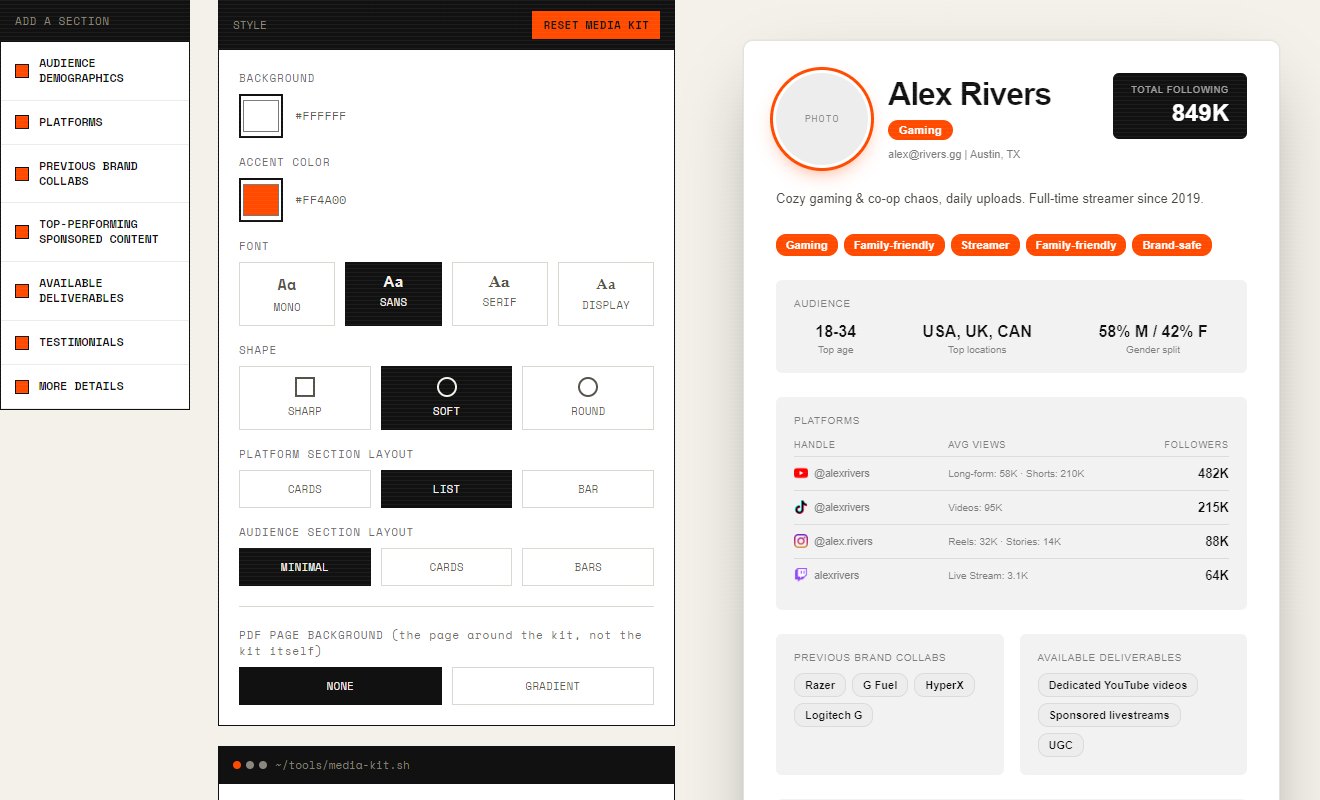
Page one: Creator introduction, core platforms, audience snapshot and recent performance.
Page two: Example content, selected collaborations, available formats and contact details.
Keep the design readable on a mobile phone. Use a consistent style and make sure any screenshots remain legible.
Five mistakes to avoid
- Showing only followers. Include evidence of actual reach and audience fit.
- Using outdated analytics. Refresh important figures before sending a major pitch.
- Overloading it with logos. A short, relevant example beats a wall of brand names.
- Making unverified claims. Explain your data and avoid unsupported “industry-leading” language.
- Hiding the contact information. Brands should know exactly how to enquire.
Frequently asked questions
Should I include my rates?
It's optional. Rates can be useful for straightforward deliverables but a bespoke quote often makes more sense when usage, exclusivity and production are involved. Our guide to what influencers charge and the free rate calculator can help you decide.
Should I make separate kits for different brands?
One core media kit is fine. Tailor the introductory note and examples when approaching a specific sector or campaign.
How often should I update it?
Review the figures whenever performance or audience composition changes materially and before important outreach.
Build your influencer media kit: key takeaways
The best media kits reduce uncertainty. They help a brand understand your audience, judge your likely performance and imagine a partnership.
Need a starting point? Use the free CEG Media Kit Generator.
Sources and further reading
- CEG media kit generator
- CEG rate calculator CPM benchmarks and format multipliers come from our rate calculator and package builder
- CEG guide: How much do influencers charge for brand deals?
How Much Do Influencers Charge for Brand Deals in 2026?
How much do influencers charge for brand deals in 2026? See CEG's CPM benchmarks by niche, how to calculate your rate and how to price usage rights.
What Does a Creator Talent Manager Actually Do?
What does a creator talent manager do? Discover how managers handle brand deals, contracts and long-term growth plus when creators need one.
How Much Commission Do Talent Managers Charge?
How much commission do talent managers charge? Typical flat rates, how CEG charges, what income is covered and the contract clauses to check before you sign.